

Plant biology is the study of how plants grow, function and respond to their environments. Plant biologists address challenges like food security, climate change and sustainable agriculture. It’s no exaggeration to say that all life relies on plants.
“Plants feed the world,” says Danielle Levi, my labmate in the Zerbe Lab and a third-year plant biology major. “Climate change is threatening global food security, and we need to find more sustainable ways to feed our growing population while minimizing environmental impacts.”
Levi studies millet, a nutrient-rich, drought-tolerant grain crop that feeds millions across the globe. She hopes to uncover how plants use mixtures of small chemicals, called terpenoids, to survive droughts and diseases and communicate with their environment. Plant biologists can then use this knowledge to inform environmentally conscious agricultural practices.
Like Levi, I was eager to get research experience. As a transfer student, I started by enrolling in a Course-based Undergraduate Research Experience (CURE) taught by Dr. Philipp Zerbe, a Professor in the Plant Biology Department. There, I practiced the techniques used in a research lab and learned the scientific principles behind them.
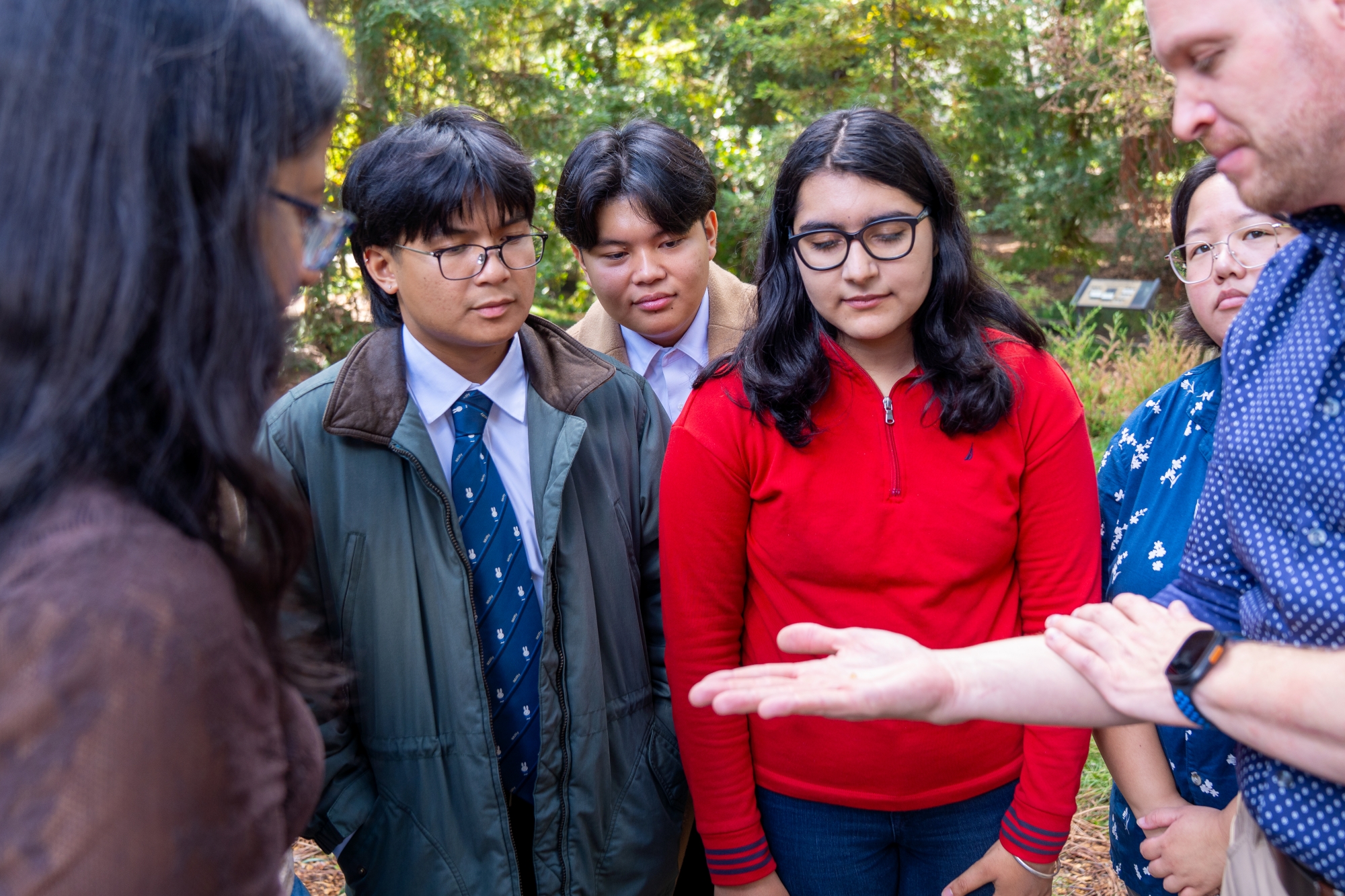
The highlight of this course was our project with the UC Davis Arboretum, where our class collected samples of plants to evaluate their chemical compounds. Using the lab’s extraction protocol, my labmates and I were able to analyze exactly what compounds the plants contained. I found that purple sage (Salvia leucophylla) contains high levels of a natural compound that may help reduce inflammation and has shown potential for fighting cancer. It’s one thing to learn about plant chemical diversity from a textbook — seeing it firsthand was even more incredible.
After completing the CURE, I had the confidence to apply for an undergraduate research position — in the Zerbe lab! Since joining, I feel like I’ve found my place in the scientific community. I study the terpenoids in Christmas trees, which help give the holiday staples their classic piney scent. I’m identifying the terpenoids responsible for the aromas consumers prefer. Understanding how trees produce these chemicals could eventually help plant breeders develop trees with particular scents.
Through this work, I've made connections with peers in the plant biology major and scientists in the field by presenting my own research at the UC Davis Undergraduate Research, Scholarship and Creative Activities Conference.
What Do Plant Biology Majors Study?
I was drawn to the plant biology major by the wide breadth of topics it covers. All plant biology majors enroll in three classes that dive in-depth into the biology of plants: Developmental Plant Anatomy (PLB 105), Plant Physiology (PLB 111) and Plant Growth and Development (PLB 112).
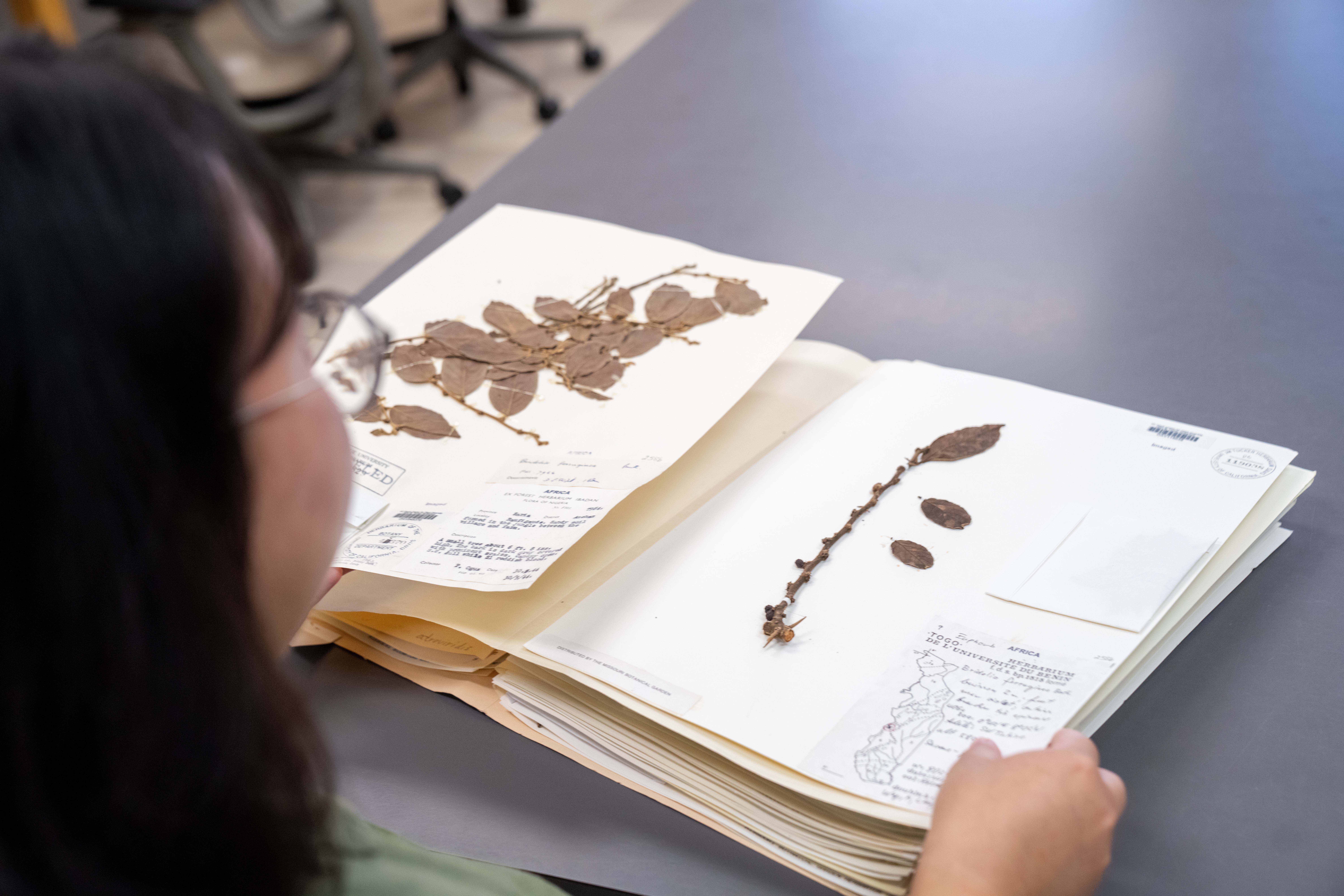
“The classes are designed to introduce students to plants and how they function as organisms from the atomic to the ecological level,” said Professor Zerbe, who also teaches PLB 111 and serves as a faculty advisor for the major.
Plant biology majors can also tailor their degrees to their interests by choosing from a broad variety of elective classes that cover plant ecology, evolution, molecular biology and even biotechnology. By teaching everything from microscopy to coding and biological engineering, the plant biology major provides students with the expertise they need to succeed academically and in their future careers.
“You learn skills that not only make you a better plant biologist, but just a better biologist,” said Professor of Teaching Joel Ledford, who teaches “Developmental Plant Anatomy” (PLB 105). The plant biology major also includes a research internship requirement, which enables students to gain laboratory experience outside of a traditional classroom setting.
“What you learn in your courses, you then apply when you join a lab and do actual research, and you learn the hands-on techniques,” he added. In addition to learning technical skills, joining a lab can be a great way to form meaningful connections with both other students and faculty in the close-knit Department of Plant Biology.
Altogether, the fundamental courses and elective classes paint a complete picture of plant biology and how scientists are innovating in the field — and help you build a community!
Research, Internships and the Plant Biology Community
Plant biology majors can gain hands-on experience through campus organizations, internships and volunteer opportunities. They have extracurricular opportunities on campus through the UC Davis Botanical Society, an organization that supports both the UC Davis Botanical Conservatory, which houses live plants, and the Center for Plant Diversity, which is home to pressed plant specimens.
Volunteers at the Botanical Conservatory learn how to maintain and care for rare plants in the on-campus greenhouses, which house thousands of different plant species. At the Center for Plant Diversity, interns practice identifying plants from pressed specimens as well as how to curate herbarium collections. The UC Davis Arboretum and Public Garden also offers internship programs where you can get involved with horticulture and on-campus outreach programs.

“Troubleshooting with plants in our greenhouses is almost like working in a lab, where you have an outcome you hope to achieve and then you test it,” said Marlene Simon, head curator of the Botanical Conservatory. These hands-on experiences teach students valuable skills and help them see how plants function from a different perspective. She added, “it’s always good to have a big picture of how plants grow, it’ll help make you a better scientist.”
As a professional writing minor, I connected my passions for plants and science communication as an outreach coordinator intern with the UC Davis Botanical Conservatory as well as the UC Davis Center for Plant Diversity. I wrote web articles about plant collections, volunteered at community events like Biodiversity Museum Day, and raised awareness about plant-focused events on social media.
Getting involved in outreach and advocacy on campus is an excellent way to share your knowledge of plants with the public. Despite the role plants play in our ecosystems, agriculture, health — even in providing the air we breathe — they are often overlooked, a sadly common phenomenon termed “plant blindness.” As a result, outreach opportunities like these are especially important to the field of plant biology.
What Can You Do With a Plant Biology Degree?
One of the things I love about plant biology is how many different directions it can take you. Plant biologists can work in agricultural research, plant breeding, biotechnology, conservation, horticulture, education and science communication. They may find jobs in research labs, government agencies, environmental organizations, biotechnology companies, botanical gardens or agricultural businesses.
Some plant biology jobs are available with a bachelor’s degree. Other careers, such as leading a research program or teaching at a university, typically require graduate school. Wherever your interests lead, research, internships and campus activities can help you build practical skills — and discover the kind of plant biology career that excites you!
Is Plant Biology the Right Major for You?
If you are interested in plants, sustainability, agriculture, biotechnology or environmental science and want opportunities to conduct hands-on research, plant biology is the major for you.

From the grass below our feet to redwoods towering over our heads, plants are the foundation of our natural world. Whether it is in our foods, medicine, or cosmetics, plant products are a crucial part of our everyday lives. The plant biology major at UC Davis teaches students about the complex processes and unique adaptations that help plants survive.
By studying plant biology, we can better understand their inner workings and how we can create a more sustainable future with plants.
If you’re interested in helping to create a more sustainable future with plant products, consider majoring in plant biology. Through this research-focused degree, students will be prepared to kickstart a career in a wide selection of fields. Many plant biology majors also choose to pursue graduate school. Those interested in continuing to further their education in plant biology at UC Davis should consider applying to the Plant Biology Graduate Group.
Media Resources
Alya Samsudin (she/her) is a recently graduated Plant Biology major with a minor in Professional Writing. She is an undergraduate researcher in the Zerbe lab where she studies the metabolites responsible for producing consumer-preferred aromas in Christmas trees. Alya hopes to further her interest in plant biochemistry by pursuing a master's degree, with the end goal of becoming a research scientist.