Beneath the urban landscapes of California lies a diverse ecosystem, teeming with invertebrates and microbes. Soil acts as a carbon sink, filters water and provides essential nutrients to plants. Maintaining healthy soil is critical for these functions.
Expert horticulturist Kitty Bolte, who oversees several collections in the UC Davis Arboretum and Public Garden, shares three essential practices California homeowners can use to protect their soil.
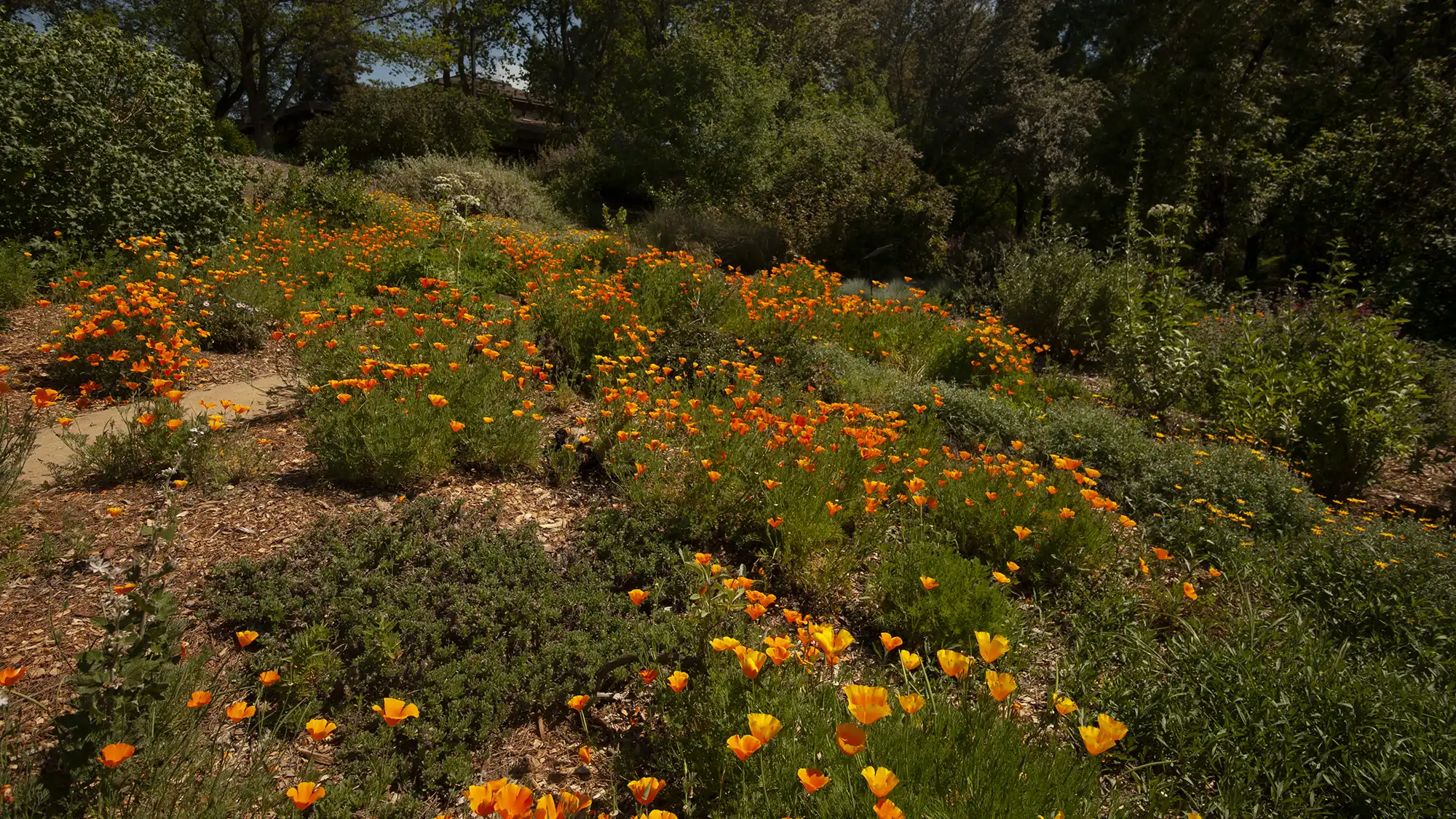
Mulch after planting
Apply mulch after planting to protect against compaction in the rainy season and minimize evaporation in the dry season. Over time, mulch breaks down into organic matter, enriching your soil. “Something that we use a lot in the Arboretum is wood chips,” Bolte said.
Keep leaf material on your property rather than raking it off. Distribute the leaves amongst your perennial beds to return nutrients and invertebrates back to the soil.
Unlike vegetable gardens, which require regular composting to replenish nutrients, ornamental landscapes don’t need this extra step, “especially if you are picking native plants adapted to a climate similar to ours,” Bolte said.
Avoid soil disturbing activities
With California’s heavy clay soils, compaction happens easily. Walk carefully around your garden and use mulch on pathways to buffer against foot traffic.
Avoid working when the soil is waterlogged. “Even in our Arboretum landscapes, we are careful about doing too much work when the soil is really saturated,” Bolte said. “It’s better to just wait, let it dry out a bit.”
Pick natives
One way to enjoy a resilient landscape that supports biodiversity is by growing California natives. Their roots, accustomed to heavy clay soils common in California, improve the soil’s ability to filter water. Native plants support a diversity of soil microbial life.
“Some people think, ‘oh, does my little yard matter?’,” Bolte said. “There's a lot of good research that shows urban landscapes can do a lot to support [above ground] biodiversity if people are planting native plants in their yard.”
Native plants create resilient landscapes that require little additional water or maintenance as summers get hotter. They’re also vital in the food web. “A lot of our native insects are specialists on native plants in one way or another,” Bolte explained. Bees favor a certain type of flower; caterpillars consume specific species of plants.
For inspiration on native and climate-ready plants, search the revamped Arboretum All-Stars database.