
How often do you talk politics with friends and family? How about with colleagues? Talking politics might lead to a disagreement, but political scientist Robert Huckfeldt believes that’s a good thing.
One way of explaining people’s political beliefs is to make assumptions based on their job, level of income, their religion and other facets of their lives. Huckfeldt, a Distinguished Professor Emeritus of political science at UC Davis, thought people’s sources of political information mattered more.
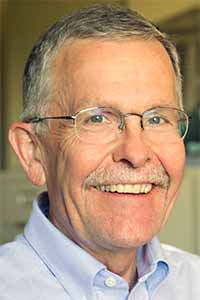
“People reside in a multiplicity of social contexts in which they gather information,” said Huckfeldt. “You overhear conversations at the lunch table when you're at work or maybe your spouse gives you information.”
Social network theory suggests that the people we interact with on a regular basis have an impact on how we think about politics and the things that matter to us. Huckfeldt thought that these relationships would have a bigger impact on political beliefs than standard sources of information, such as newspapers or television reports.
Huckfeldt tested this idea with interviews that asked his research participants in Indiana about the people they are closest to and measured how those individual relationships affected their personal politics. His approach, which he detailed in a 1981 paper, drew a clear distinction between a person’s context, such as their religion or recreational activities, and the networks of people in their lives.
AMONG THE ACADEMIES
UC Davis has dozens of faculty members who belong to some of the most prestigious membership organizations in the world, a recognition of their distinguished and continuing achievements in research.
Each month, Dateline UC Davis will profile one of these faculty members in honor of their contributions to research and knowledge.
He found that in each of those relationships, people share and receive information that then influences their individual political beliefs and decisions. He also found that this effect has a powerful influence on the decisions of an electorate of voters.
“We're all embedded in these relationships where we're getting information,” said Huckfeldt. “This doesn’t negate getting information from the newspaper, but then you talk about it with your friends who might say you're missing something.”
Huckfeldt has published research on social networks and politics since the 1980s and since then expanded his work across multiple facets of political communication and influence. For his body of work, Huckfeldt has received numerous honors and awards, including election to the American Academy of Arts and Sciences in 2014. He joined UC Davis as a Distinguished Professor of political science in 2003 and retired in 2019.
Huckfeldt’s research is as relevant today as it has ever been. One change since Huckfeldt first studied social networks and politics is the rise of social media, although the virtual relationships within these networks function a lot like the other relationships in our lives, he said. Many might not involve politics, but some might.
“If you're in a network full of people who pay a lot of attention to politics, then you're going to have a lot of information coming at you from all sides,” he said.
Having rich and varied sources of information are important, he said, but it’s even more important to share, discuss and even argue over that information rather than take any of it at face value. People should gather information to the extent they can, but they should also test that information with other people.
“Interacting with someone who doesn't share your view may push you to take another look at your belief or your opinion,” he said. “You might have some information but you’re also talking to individuals who have their own information, and as a result relationships are formed and opinions are changed.”
Media Resources
- Alex Russell, College of Letters and Science, parussell@ucdavis.edu