

Students Help Digitize UC Davis Fine Arts Collection

Scroll down to continue

Backstory: Digitizing the Museum Collection, now on view at the Jan Shrem and Maria Manetti Shrem Museum of Art at the University of California, Davis, sounds like a contradiction. How can anything digital be an art exhibition?

One might expect screens, video depictions of art, a few people taking photos of art. Others are dutifully recording details in a database. A few pieces of art might be stacked on shelves. Some might be on display.

It is all those things and much more.

By Karen Nikos-Rose

Students and museum staff photograph and record data to form a digital record of an artwork across from the gallery's Salon wall of art in the collection. (Gregory Urquiaga/UC Davis)

Museum staff and students prepare art

Gregory Urquiaga/UC Davis

The exhibition, which opened in January, takes visitors behind the scenes of a museum. It invites them to see the inner workings of collection management, digitizing, research, documentation, art preparation and photography. 

And, there’s a lot of great art to see.

The exhibition was developed by Randy Roberts, museum deputy director, and Associate Curator for Collection Digitization Jez Flores-Garcia, with support from 37 UC Davis students in the spring 2025 exhibition practicum course.

Assistant Professor Alexandra Sofroniew, instructor for practicum course, stands in art gallery. (Gregory Urquiaga/UC Davis)

Students in course help define user experience

Gregory Urquiaga/UC Davis

Assistant Professor of Art History Alexandra Sofroniew guided undergraduate and graduate students in defining and organizing multiple aspects of the exhibition and visitor experience. Students contributed ideas by selecting some of their favorite works, adding a "Digi Know?" feature to the exhibition (highlighting little-known facts) and incorporating a TikTok "unboxing" trend where people film themselves opening a package. An iconic painting was uncrated at a museum event.

Claire Finley, a sophomore Art History major, gestures to work on gallery wall.

Classwork comes to life

Gregory Urquiaga/UC Davis

Claire Finley, a junior art history major, gestures to a video screen on a gallery wall. This, she said, was one of the class ideas: to display art on a screen after it was digitized by staff. The frame changed to another artwork as she stood there. This is how many of the concepts talked about by the class came to life in the exhibition. Finley stands in front of a class photograph and a thank-you for their work. 

Madeline Madrid, a first-year master's degree student, is excited to see a Gilhooley frog in the exhibition.

A beloved Gilhooly frog

Gregory Urquiaga/UC Davis

Madeline Madrid, an art history M.A. student, was thrilled to see her favorite "frog" on view, as she had advocated. It is the work of the late artist David Gilhooly, who received his bachelor's and master's degrees at UC Davis in the 1960s, working as an assistant to UC Davis artist and Professor Robert Arneson. Gilhooly was famous for, among other things, multiple depictions of frogs, mostly in ceramic. 

Waiting to unbox

Gregory Urquiaga/UC Davis

In full view to museumgoers are displays normally reserved for behind the scenes: boxes of still uncrated artworks. These are located in a gallery that continually changes as works rotate to the next step. The Fine Arts Collection contains more than 5,000 works ranging from ancient art to contemporary art donated or purchased in the past year, including the works of UC Davis M.F.A. students.

The exhibit is made possible by Carol and Gerry Parker through the Parker Family Digitization Fund.

Students view art in drawers

Collection's key items

Gregory Urquiaga/UC Davis

Students view Polaroid shots by Andy Warhol in one of many drawers stowing the collection's works on paper awaiting digitization. These keep company with UC Davis and non-UC Davis-related works by such artists as Ansel Adams, Robert Arneson, Joan Brown, Deborah Butterfield, Roy De Forest, Richard Diebenkorn, Kota Ezawa, Mike Henderson, Stephen Kaltenbach, Agnes Martin, Bruce Nauman, Roland Petersen, Jaune Quick-to-See Smith, Wayne Thiebaud and William T. Wiley. All visitors can view them.

Student illustrates the backstory of an artwork.

Backstory

Gregory Urquiaga/UC Davis

Morgan Strong illustrates the concept of "backstory." This refers to the back of a work, documenting the history of places and dates where a work was exhibited or sold. This view is not something museum visitors ordinarily see or know about. Strong is an art studio and design double major who took the art history and design classes that worked on Light into Density, a previous student-museum collaborative exhibition. She worked with the museum on designing this exhibition layout.

Anya Thompson, a second-year MA study in art history, discusses the concept of the Salon Wall.

Salon wall

Gregry Urquiaga/UC Davis

Anya Thompson, a '25 M.A. student in art history who is now on the digitization staff to record data on each piece, explains the salon wall. The gallery wall was suggested by students. Located directly across from the digitization area, it displays a variety of artworks from the collection with Wayne Thiebaud's sketch, by her left arm, in the center, and multiple generations of artists' works jutting out in all directions. 

Cadmeal Tapiz Zapata, a junior Art History student, illustrates how museum visitors can identify art and artists on the Salon Wall. The wall includes a an art video as well.

Identifying art, artists

Gregory Urquiaga/UC Davis

Cadmael Tapia Zapata, a junior majoring in art history, uses a laminated guide to show how museum visitors can identify art and artists on the salon wall. The wall includes a few video works, such as one by Bruce Nauman, M.A. '66, shown in this photo.   

Students even updated Wikipedia entries of several lesser-known artists in the collection. The research was often challenging but rewarding, Sofroniew said. 

Maggie Mariani, a sociological anthropology major, and Finley, take in the exhibition.

Circles of time

Gregory Urquiaga/UC Davis

Maggie Mariani, a sociocultural anthropology major, and Finley, view the exhibition near the five circles — an organizational detail that was difficult to explain in class, but easily illustrated in the exhibition. Each circle groups artists by their relationship to UC Davis — from first-generation faculty artists, M.F.A. and M.A. students, UC Davis-related artists, 20th- and 21st-century artists, and pre-20th century. Art is then identified by the color of each circle. 

A wall of sticky notes with questions and answers

Digi-Know?

Gregory Urquiaga/UC Davis

Students were excited to see in a recent tour that questions they posed for visitors to ponder, displayed in the exhibition, were answered by museum staff for all to see. Students and curatorial staff discovered artists represented in the collection were married to each other, substantial works of art were given by the late faculty spouses Fay Nelson and Sandy Shannonhouse, and a lot of jobs in a museum are not held by art experts.

Vase made by Arneson is prepped for photographing and digital recording in database.

Digi-Know Robert Arneson

Gregory Urquiaga/UC Davis

Robert Arneson, known by current students and others for the iconic Eggheads that dot the UC Davis campus and his satirical treatment of subjects, also made other things. Here, M.F.A. student Julio Cesar Rodriguez prepares one of Arneson’s vases on a recent day. 

Careful inspection

Steps in the process
Gregory Urquiaga/UC Davis

Viveka Smith, a junior art history major who was in the course and also helps with the project as a member of the museum staff, inspects a recently uncrated work, a step in the digitization process. 

Once the museum staff digitizes the works, all will go from being a campus collection to being globally accessible for free in partnership with the UC Davis Library. The digitization launch happens in conjunction with the museum's 10th anniversary in fall 2026.

The exhibition runs through May 2.

Students Help Digitize UC Davis Fine Arts Collection
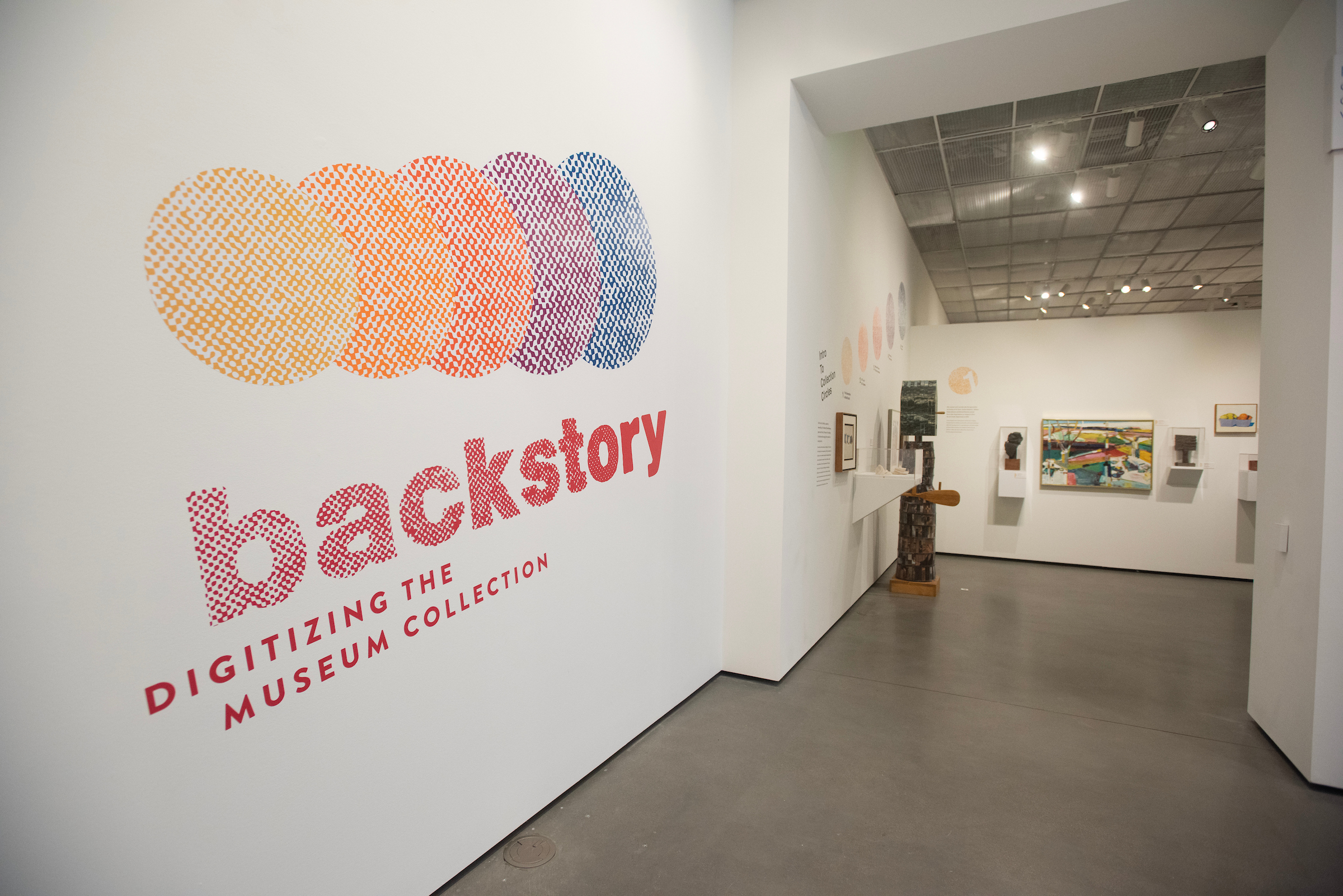
Backstory: Digitizing the Museum Collection, now on view at the Jan Shrem and Maria Manetti Shrem Museum of Art at the University of California, Davis, sounds like a contradiction. How can anything digital be an art exhibition?

One might expect screens, video depictions of art, a few people taking photos of art. Others are dutifully recording details in a database. A few pieces of art might be stacked on shelves. Some might be on display.

It is all those things and much more.

By Karen Nikos-Rose

The exhibition, which opened in January, takes visitors behind the scenes of a museum. It invites them to see the inner workings of collection management, digitizing, research, documentation, art preparation and photography. 

And, there’s a lot of great art to see.

The exhibition was developed by Randy Roberts, museum deputy director, and Associate Curator for Collection Digitization Jez Flores-Garcia, with support from 37 UC Davis students in the spring 2025 exhibition practicum course.

Assistant Professor of Art History Alexandra Sofroniew guided undergraduate and graduate students in defining and organizing multiple aspects of the exhibition and visitor experience. Students contributed ideas by selecting some of their favorite works, adding a "Digi Know?" feature to the exhibition (highlighting little-known facts) and incorporating a TikTok "unboxing" trend where people film themselves opening a package. An iconic painting was uncrated at a museum event.

Claire Finley, a junior art history major, gestures to a video screen on a gallery wall. This, she said, was one of the class ideas: to display art on a screen after it was digitized by staff. The frame changed to another artwork as she stood there. This is how many of the concepts talked about by the class came to life in the exhibition. Finley stands in front of a class photograph and a thank-you for their work. 
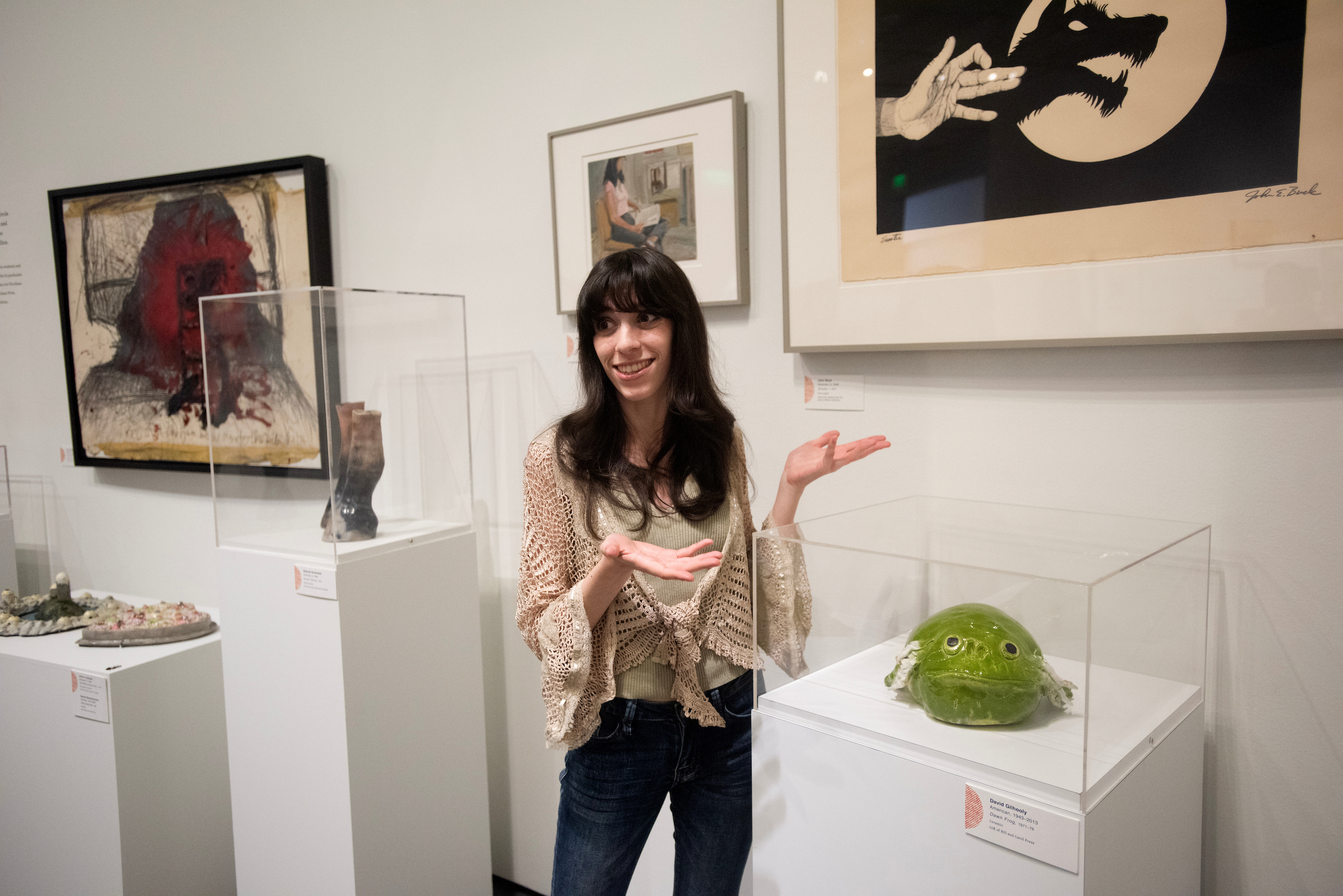
Madeline Madrid, an art history M.A. student, was thrilled to see her favorite "frog" on view, as she had advocated. It is the work of the late artist David Gilhooly, who received his bachelor's and master's degrees at UC Davis in the 1960s, working as an assistant to UC Davis artist and Professor Robert Arneson. Gilhooly was famous for, among other things, multiple depictions of frogs, mostly in ceramic. 
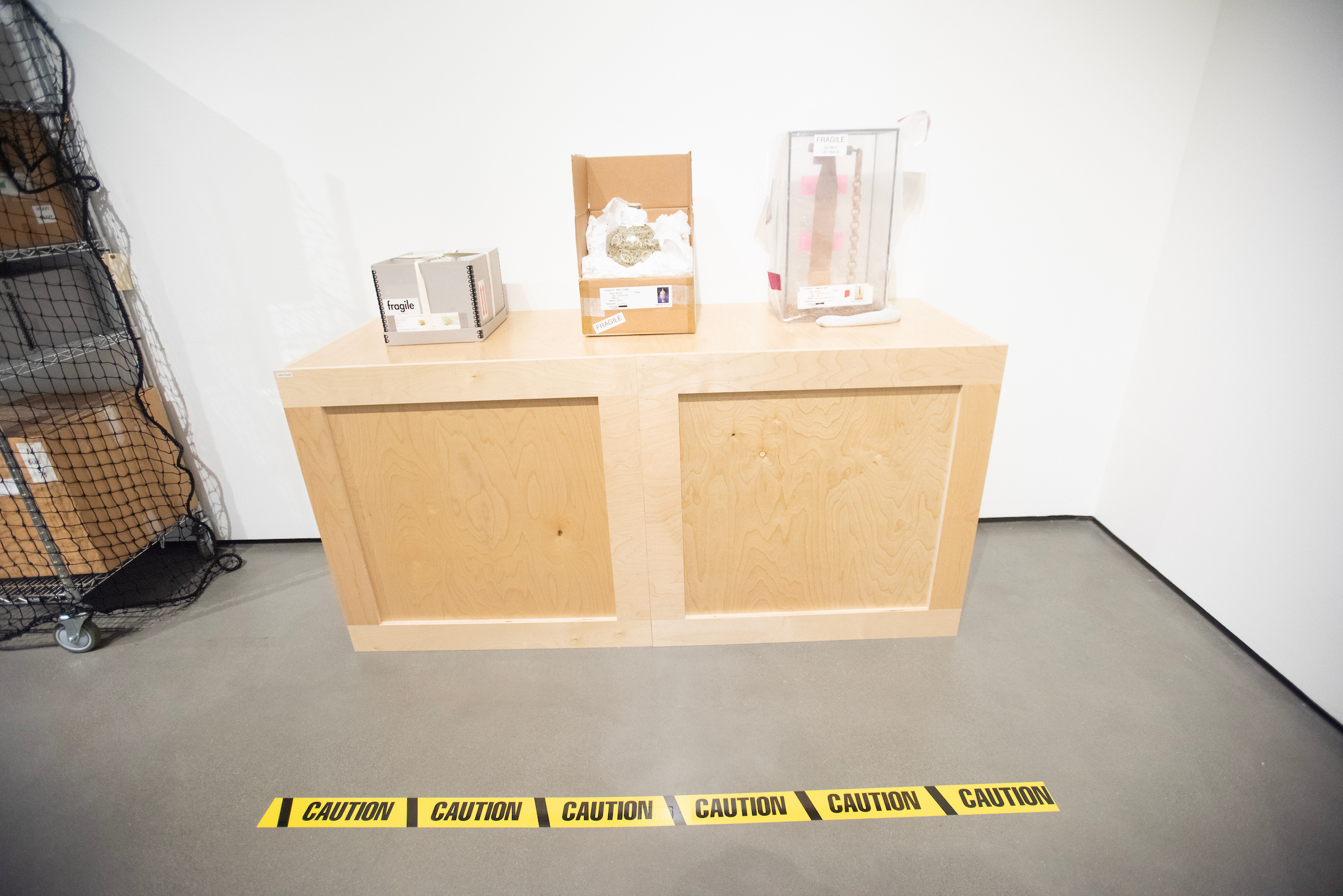
In full view to museumgoers are displays normally reserved for behind the scenes: boxes of still uncrated artworks. These are located in a gallery that continually changes as works rotate to the next step. The Fine Arts Collection contains more than 5,000 works ranging from ancient art to contemporary art donated or purchased in the past year, including the works of UC Davis M.F.A. students.

The exhibit is made possible by Carol and Gerry Parker through the Parker Family Digitization Fund.

Students view Polaroid shots by Andy Warhol in one of many drawers stowing the collection's works on paper awaiting digitization. These keep company with UC Davis and non-UC Davis-related works by such artists as Ansel Adams, Robert Arneson, Joan Brown, Deborah Butterfield, Roy De Forest, Richard Diebenkorn, Kota Ezawa, Mike Henderson, Stephen Kaltenbach, Agnes Martin, Bruce Nauman, Roland Petersen, Jaune Quick-to-See Smith, Wayne Thiebaud and William T. Wiley. All visitors can view them.

Morgan Strong illustrates the concept of "backstory." This refers to the back of a work, documenting the history of places and dates where a work was exhibited or sold. This view is not something museum visitors ordinarily see or know about. Strong is an art studio and design double major who took the art history and design classes that worked on Light into Density, a previous student-museum collaborative exhibition. She worked with the museum on designing this exhibition layout.

Anya Thompson, a '25 M.A. student in art history who is now on the digitization staff to record data on each piece, explains the salon wall. The gallery wall was suggested by students. Located directly across from the digitization area, it displays a variety of artworks from the collection with Wayne Thiebaud's sketch, by her left arm, in the center, and multiple generations of artists' works jutting out in all directions. 
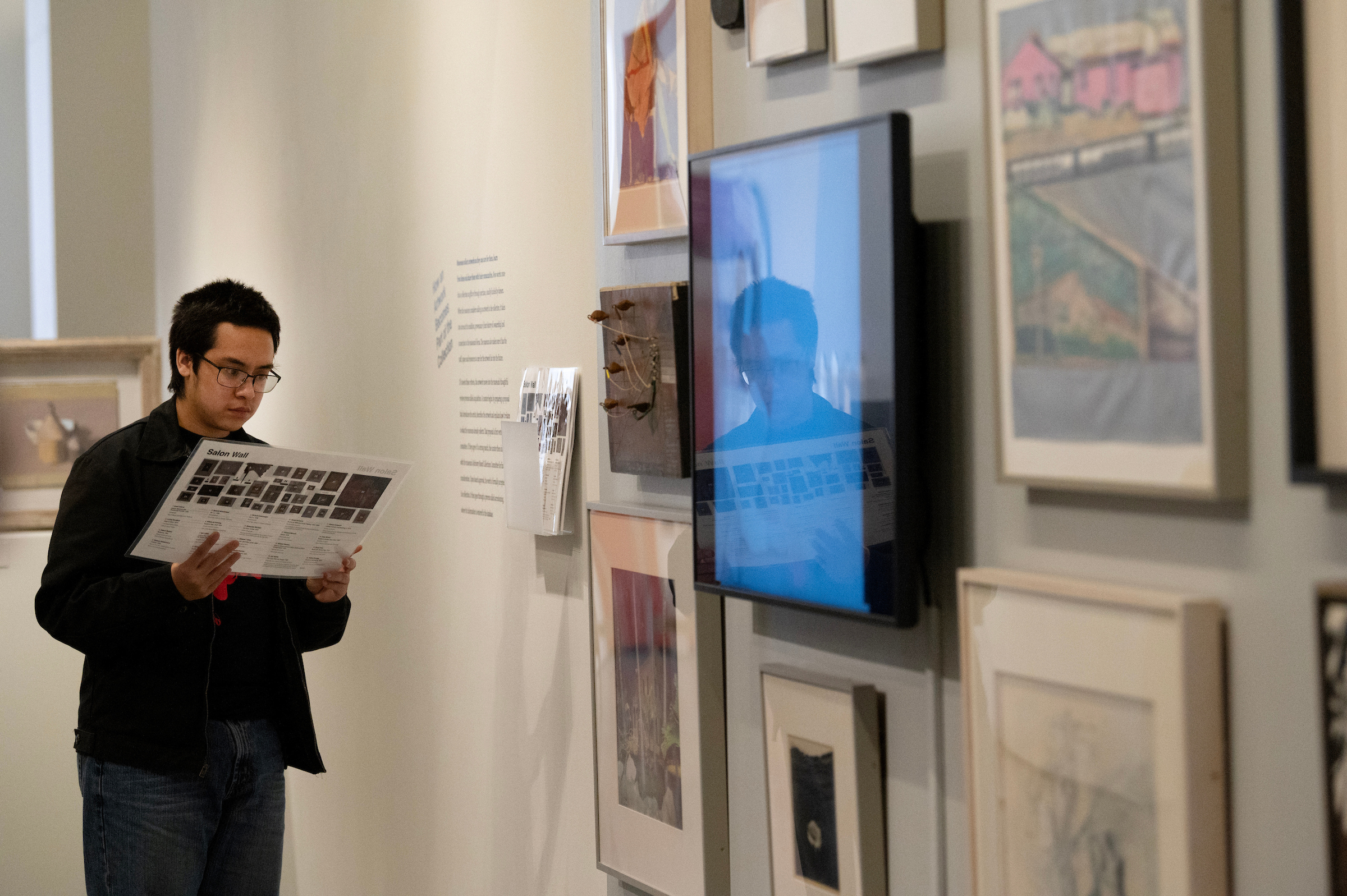
Cadmael Tapia Zapata, a junior majoring in art history, uses a laminated guide to show how museum visitors can identify art and artists on the salon wall. The wall includes a few video works, such as one by Bruce Nauman, M.A. '66, shown in this photo.   

Students even updated Wikipedia entries of several lesser-known artists in the collection. The research was often challenging but rewarding, Sofroniew said. 

Maggie Mariani, a sociocultural anthropology major, and Finley, view the exhibition near the five circles — an organizational detail that was difficult to explain in class, but easily illustrated in the exhibition. Each circle groups artists by their relationship to UC Davis — from first-generation faculty artists, M.F.A. and M.A. students, UC Davis-related artists, 20th- and 21st-century artists, and pre-20th century. Art is then identified by the color of each circle. 
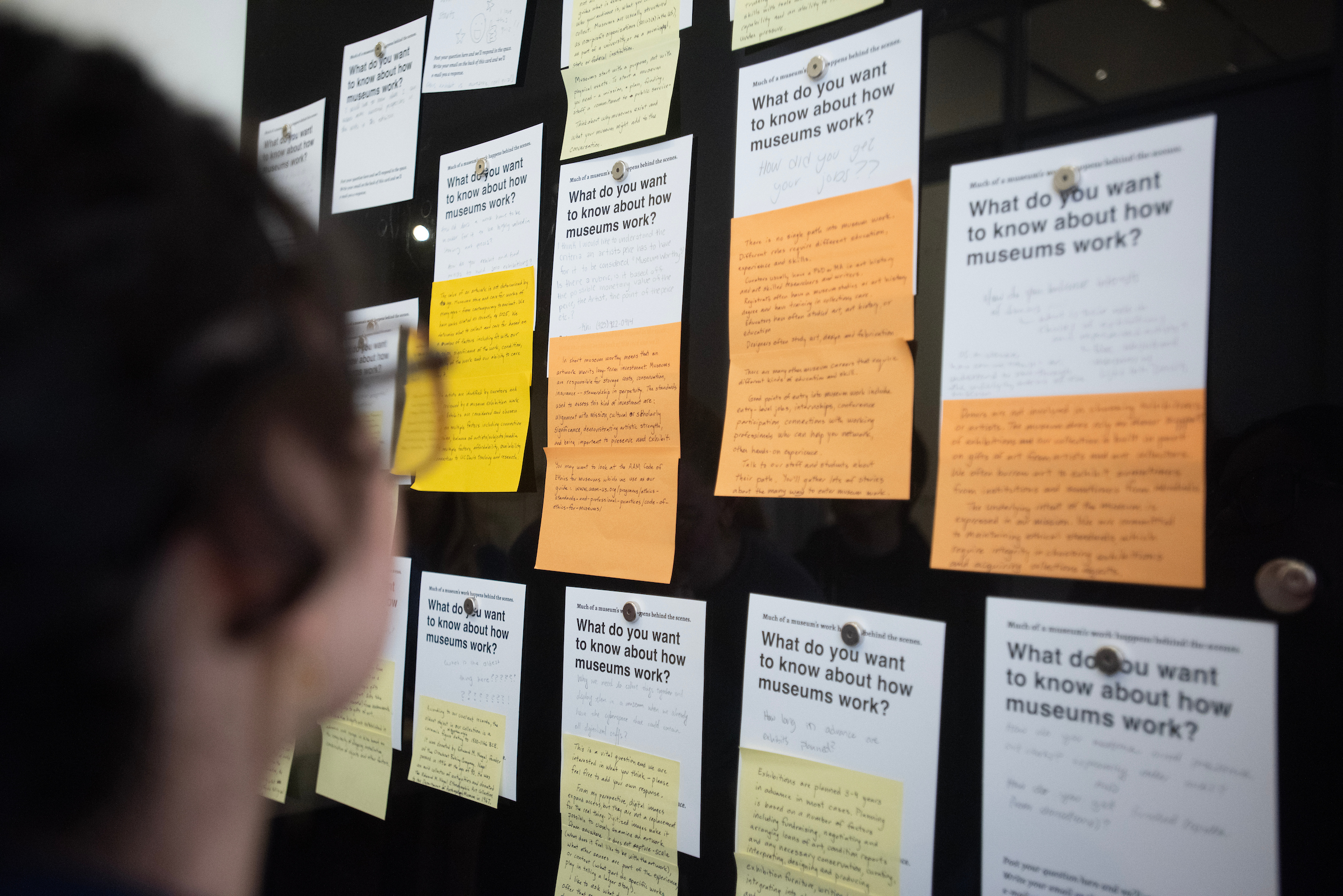
Students were excited to see in a recent tour that questions they posed for visitors to ponder, displayed in the exhibition, were answered by museum staff for all to see. Students and curatorial staff discovered artists represented in the collection were married to each other, substantial works of art were given by the late faculty spouses Fay Nelson and Sandy Shannonhouse, and a lot of jobs in a museum are not held by art experts.
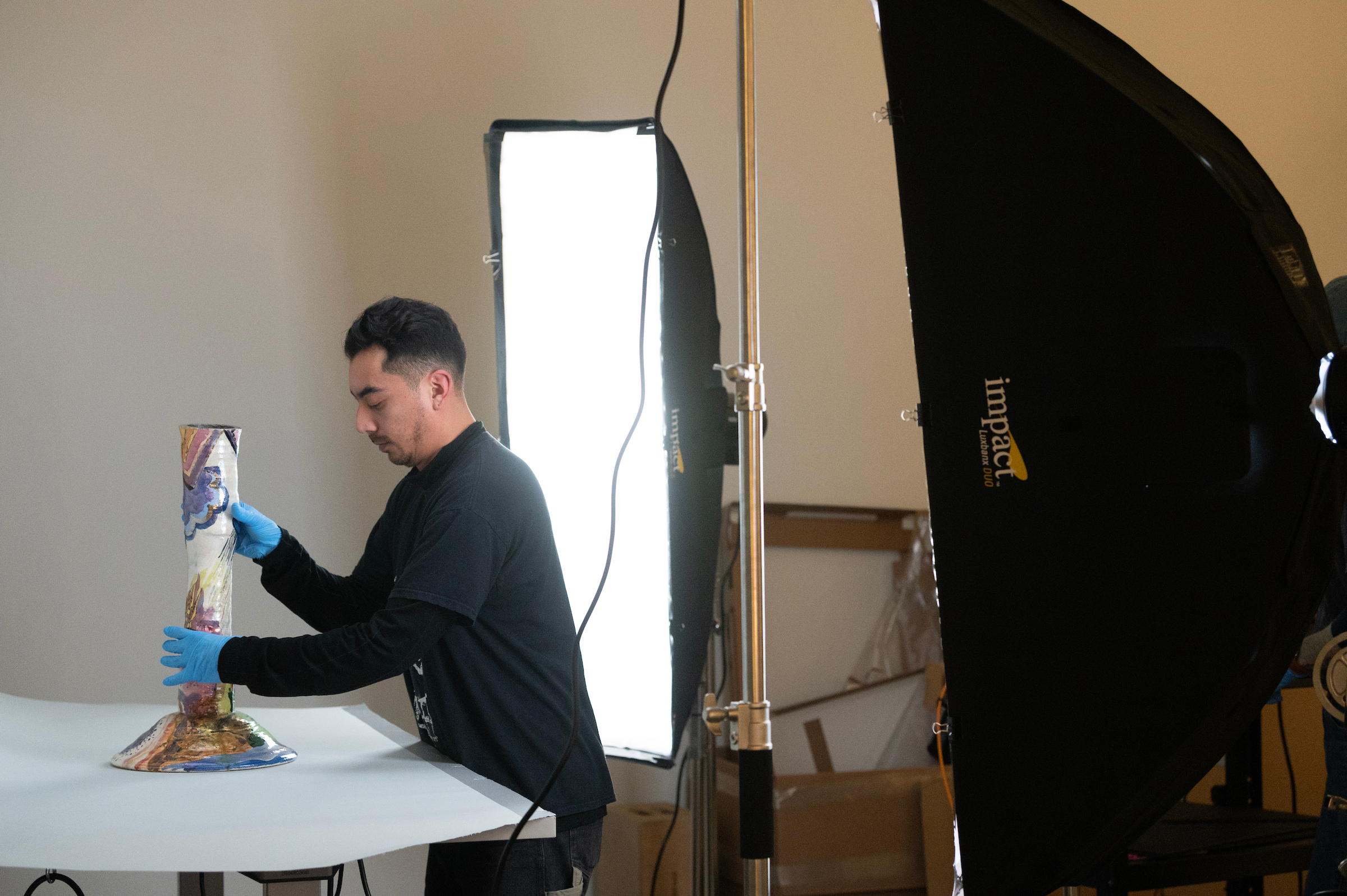
Robert Arneson, known by current students and others for the iconic Eggheads that dot the UC Davis campus and his satirical treatment of subjects, also made other things. Here, M.F.A. student Julio Cesar Rodriguez prepares one of Arneson’s vases on a recent day. 

Viveka Smith, a junior art history major who was in the course and also helps with the project as a member of the museum staff, inspects a recently uncrated work, a step in the digitization process. 

Once the museum staff digitizes the works, all will go from being a campus collection to being globally accessible for free in partnership with the UC Davis Library. The digitization launch happens in conjunction with the museum's 10th anniversary in fall 2026.

The exhibition runs through May 2.